Managing a year-end manufacturing budget requires precision, agility, and the right supply chain strategy. As…

4140 & Shafting: Strength and Wear Resistance Explained
4140 shafting is a viable option for many applications, thanks in part to its remarkable strength and wear resistance. That said, what is the difference between these features, and how can they affect the steel’s performance?
At Specialty Steel, we’re committed to providing the best steel products around, whether you need sheets, 4140 shafts, or steel bars. So, let’s break down the core components of 4140 shafting and why it might be the best choice for your next project.
A Brief Overview of 4140 Steel Shafts
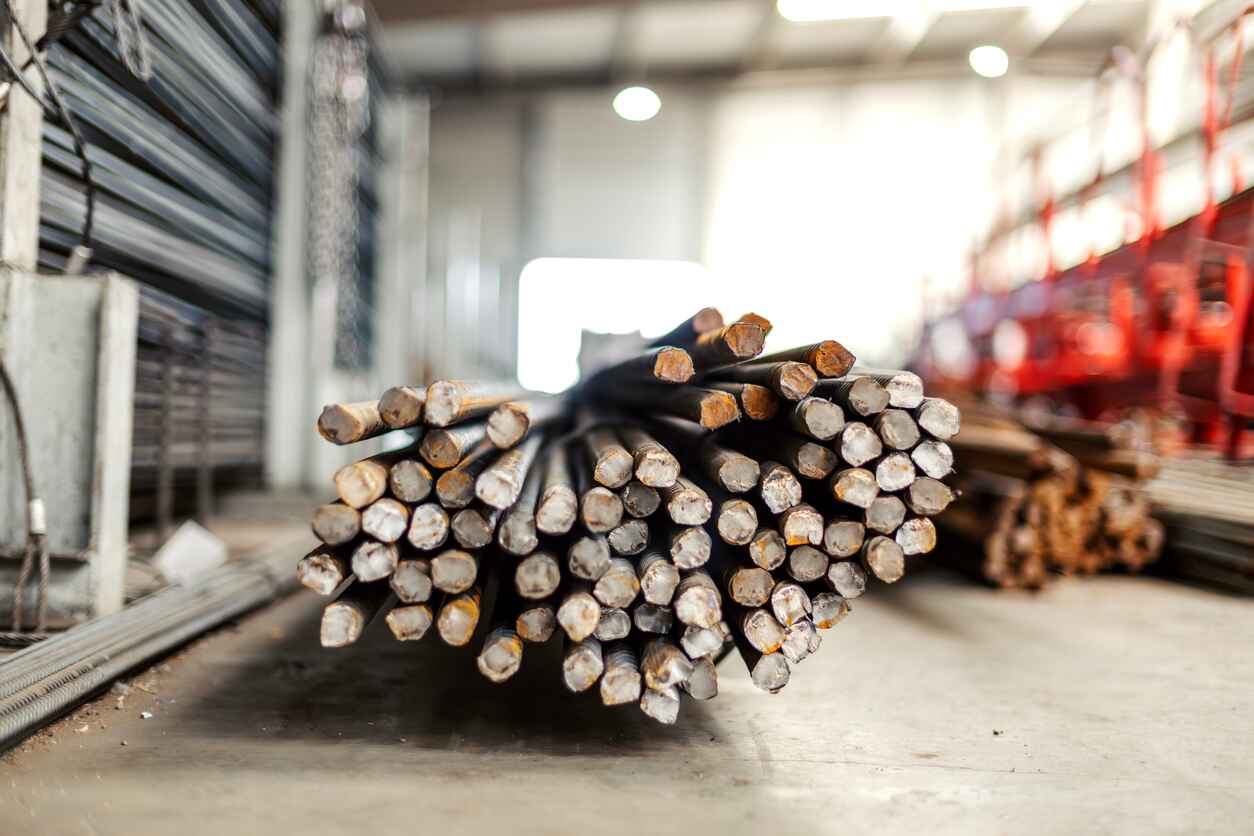
Steel shafts are cylindrical pieces of metal that can come in a wide array of diameters and lengths. Typically, 4140 shafts are used in industries like automotive, aerospace, and mining because they work well in machinery. For example, these shafts can act as pistons, axles, crankshafts, and more. Why is 4140 steel so common and widely used?
- It’s a plentiful and affordable material, so many manufacturers can keep it in stock when building factory parts or equipment.
- This steel has excellent strength and wear resistance, meaning it can be deployed in virtually any environment without needing to be replaced quickly or often.
Beyond simple availability, the true value of this grade lies in its “hardenability.” Unlike basic carbon metals that only harden on the very surface, the addition of specific noble elements allows the hardening process to penetrate deep into the center of a large-diameter bar. This ensures that the mechanical integrity is uniform from the surface to the core, which is a vital requirement for any component subjected to heavy torque or rotational stress.
At Specialty Steel, we go a step further and make 4140 shafting even more appealing by offering customized sizing and pre-hardening. This way, you can spend less time machining and hardening your steel, saving time and money in the process.
The Chemical Composition: What Drives Performance?
To understand why this specific grade is so effective for shafting, we must look at its chemistry. It is a medium-carbon steel, typically containing 0.38% to 0.43% carbon. This carbon level is the “sweet spot” for heat treatment; it provides enough carbon to reach high hardness levels through quenching while maintaining enough ductility to prevent the metal from becoming brittle.
The alloying elements further enhance these natural characteristics:
- Chromium (0.80% – 1.10%): This element improves the “hardenability” of the metal, ensuring that when the material is heat-treated, the hardness penetrates deep into the core rather than just staying on the surface. It also contributes significantly to the material’s ability to resist abrasion.
- Molybdenum (0.15% – 0.25%): Molybdenum increases the overall toughness and prevents the steel from becoming brittle at higher temperatures. It also helps the material maintain its mechanical strength even during prolonged periods of high-stress operation.
- Manganese (0.75% – 1.00%): Manganese acts as a deoxidizer and helps to increase the tensile strength of the finished product.
A Breakdown of the Strength and Wear Resistance of 4140 Steel Shafts
Here are the standard measurements for strength and hardness for 4140 steel in the heat treated condition.
- Tensile Strength – 965 MPa or 140,000 PSI
- Yield Strength – 827 MPa or 120,000 PSI
- Brinell Hardness – 269/341
- Rockwell Hardness – 28-32 Rockwell C (HRC) for light sections like 4140 PH steel plate, and 22-27 HRC for heavier sections.
- Vickers Hardness – 207
When engineers select a material for a rotating shaft, they look closely at two metrics: Tensile Strength and Yield Strength. In its pre-hardened or heat-treated state (often referred to as Quenched & Tempered), 4140 can reach a tensile strength exceeding 150,000 PSI depending on the specific diameter. This is the maximum amount of “pulling” or stretching stress the material can take before it physically breaks. However, for shafting, the Yield Strength is arguably more important. The yield point is the limit at which the steel will permanently deform. For heat-treated 4140, the yield strength typically sits around 125,000 PSI. This high threshold ensures that even under heavy shock loads or sudden spikes in torque, the shaft will flex slightly and return to its original shape rather than bending permanently or snapping.
- Carbon – 4140 steel is considered a medium carbon steel, it’s stronger than other metals that have less carbon.
- Chromium – This element helps improve the hardness and strength of 4140 steel.
The TGP Advantage for Precision Shafting
For many industrial applications, strength alone isn’t enough. If a shaft is part of a bearing assembly or interacts with seals, its surface must be incredibly smooth and resistant to wear. This is where Turned, Ground, and Polished (TGP) processing comes into play. TGP is a secondary finishing process that transforms a standard bar into a precision-engineered component.
- Turning: The bar is machined down to a specific size to remove the “scale” or decarburization layer found on raw hot-rolled material.
- Grinding: The bar passes through precision grinding machines to achieve extremely tight dimensional tolerances (often within +0.000 / -0.001 inches).
- 3. Polishing: Finally, the surface is polished to a mirror-like finish. This smooth surface reduces friction against bushings and bearings, which in turn minimizes heat generation and extends the life of both the shaft and the surrounding components.
One minor downside of being such a hard and wear-resistant metal is that 4140 steel can be more challenging to machine. No matter what kind of steel parts you buy for your project, you’ll need to machine them so they match your specifications and dimensions.
Since 4140 shafts are harder and stronger than most other steels, machining requires more skill, time, and higher-quality equipment.
Conversely, despite the material’s strength and hardness, 4140 steel is very easy to anneal and harden. The metal responds well to heat treatment, allowing you to customize your shafting further and improve elements like machineability and surface hardness.
Heat Treatment Variations
The beauty of this material lies in its adaptability. Depending on the intended use, it can be supplied in several different conditions:
- Annealed: The material is heated and cooled slowly to its softest state. This is ideal for complex machining where tool wear needs to be minimized. However, the finished part must be heat-treated afterward to gain the required strength.
- Quenched & Tempered (Q&T): This is the “ready-to-use” condition. The material has already been hardened to a specific range (usually 28–34 Rockwell C). It offers a balance of high strength and sufficient machinability for most shop environments.
- Induction Hardening: For parts that require extreme surface durability (like gear teeth or heavy-duty drive shafts), the surface can be “flash” heated and quenched. This creates a glass-hard outer shell while leaving the core tough and flexible.
Overall, 4140 steel is an adaptable and versatile metal that can work well across almost all industries.
Steel Strength vs. Wear Resistance
While both steel strength and wear resistance are crucial for a material’s performance, they describe different characteristics.
Strength is a material’s ability to withstand an applied force without deforming or breaking.
Wear resistance is a material’s ability to resist the loss of surface material from friction or erosion.
While both of these elements may seem similar, they refer to specific and unique components of the material. Here’s how they differ:
Strength
- Resists bending and breaking
- Measured by tensile and yield strength
- Key in load-bearing parts like axles and shafts
- 4140 steel excels due to its chemical makeup and thickness
Wear Resistance
- Resists scratching, denting, surface damage
- Related to hardness (Brinell, Rockwell, Vickers tests)
- Crucial for tools, gears, dies, or high-friction parts
- 4140 steel can be heat-treated for higher surface hardness
Common Industrial Applications
Because of its well-rounded profile, you will find this material in virtually every heavy industry:
- Oil and Gas: Drill collars and stabilizers use this steel to withstand the immense pressures and corrosive environments found deep underground.
- Automotive: Performance axles, crankshafts, and steering knuckles rely on the fatigue resistance of these alloys.
- Agriculture: High-wear parts like plow shares and cultivator teeth use the material’s hardness to resist the constant abrasion of soil and rocks.
- Manufacturing: Precision lead screws, spindles, and hydraulic piston rods utilize the TGP finish for smooth, repeatable motion.
Frequently Asked Questions (FAQ)
Is 4140 material easy to weld?
It is considered “moderately” weldable, but it is not as simple as welding mild steel. Due to the carbon and chromium content, there is a risk of cracking in the heat-affected zone. To weld it successfully, you must pre-heat the material (typically to 400°F–600°F) and perform a slow cooling process or post-weld stress relief to prevent brittleness.
What is the difference between this and 4150?
The main difference is the carbon content. 4150 contains slightly more carbon (approx. 0.50%), which allows it to reach higher levels of hardness and strength after heat treatment. However, 4140 is more commonly used for shafting because it offers better ductility and is less likely to crack under sudden impact.
Does this material rust easily?
Yes, like most low-alloy materials, it will oxidize (rust) if exposed to moisture or corrosive chemicals. It does not have the high chromium levels found in corrosion-resistant grades to form a protective oxide layer. It is usually recommended to apply a protective oil, plating, or paint to the finished parts to prevent surface corrosion.
What is the typical hardness of pre-hardened stock?
Standard pre-hardened stock usually falls between 28 and 34 on the Rockwell C scale (HRC). This is hard enough to provide excellent wear resistance and strength, but soft enough that it can still be machined with carbide tooling without the need for specialized grinding equipment.
Why is a TGP finish important for high-speed shafts?
In high-speed rotational applications, any imbalance or surface imperfection can lead to vibration, which causes premature bearing failure. The precision grinding involved in the TGP process ensures the bar is perfectly round and straight, which is critical for maintaining balance at high RPMs.
Not Sure What You Need? Let’s Talk 4140 Shafting!
Now that you understand the difference between strength and wear resistance, you can buy the right 4140 shafting for your next project. At Specialty Steel, we provide traceability and quality assurances on all of our metals, giving you the confidence to purchase as much steel as necessary to meet your project needs.
Our customer service team can also assist you in finding the right dimensions and custom size options. While customized steel shafts can be more expensive upfront, they can often lead to higher savings later on, especially when considering the cost of specialty machining.
Reach out to us today, and let’s help you find the best 4140 shafting.
Related Posts