
316 Stainless Steel
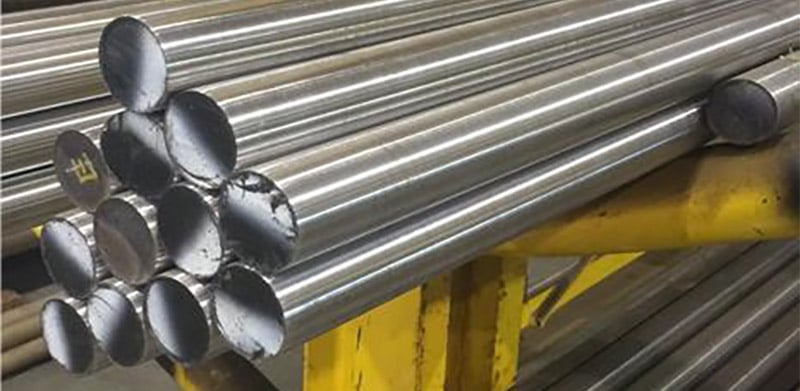
316 stainless steel is a high-performance austenitic alloy, recognized for its exceptional corrosion resistance, strength, and durability. It is a preferred choice for applications in harsh environments where exposure to chemicals, saltwater, and high temperatures is common. At Specialty Steel, we provide high-quality 316L stainless steel, turned, ground, and polished (TGP) shafting, meeting stringent ISO quality standards.
While standard 316 stainless steel is a powerful workhorse of a metal, suitable for many applications, 316L stainless steel is preferred in situations that require extensive welding. Since this variation has less carbon, it’s much more resistant to weld decay, saving time and money on post-welding treatments, such as annealing.
316 Stainless Steel Offerings
Specialty Steel provides dual-certified 316/316L stainless steel in various sizes, including TG&P shafting, to meet specific project requirements. Our SS 316 material properties meet ISO quality standards, ensuring high reliability.
Because this type of steel is dual-certified, you don’t have to maintain an inventory of both standard 316 and 316L stainless steel. Instead, you can stock up on one material that can be utilized for virtually all projects. Overall, dual-certified steel helps streamline operations and minimize costs, helping strengthen your bottom line.
Key Properties of 316, 316L and T316L Stainless Steel
Corrosion Resistance: The addition of molybdenum (2-3%) enhances resistance to pitting and corrosion, particularly in chloride-rich environments like marine and chemical settings.
Heat Resistance: 316 stainless steel maintains structural integrity at high service temperatures up to 1,400°F, making it suitable for demanding industrial applications.
Durability: With a tensile strength of 80,000 PSI, this steel offers remarkable toughness and wear resistance, ideal for heavy-duty applications such as TGP shafting.
Low Carbon Content (316L): Reduced carbon minimizes carbide precipitation during welding, improving corrosion resistance in welded components
Typical Mechanical Properties
- Brinell Hardness – 290 BHN Max
- Tensile Strength – 94,000 psi min
- Yield Strength – 65,000 psi min
Available Lengths
11/13 FT R/L
316 Stainless Steel Features and Chemical Composition:
- Key Features: Contains up to 0.08% carbon, offering excellent tensile strength and corrosion resistance. The addition of 2-3% molybdenum enhances resistance to pitting and crevice corrosion.
- Applications: Commonly used in chemical processing, marine environments, and structural components exposed to harsh conditions.
Chemical Composition of 316 Stainless Steel
| C | Mn | Si | P | S | Cr | Mo | Ni |
| .08 max | .2.00 max | 1.00 max | .045 max | .030 max | 16.00-18.00 | 2.00-3.00 | 10.00-14.00 |
316L Stainless Steel Features and Chemical Composition:
- Key Features: A low-carbon variant of 316 stainless steel, with a maximum carbon content of 0.03%, reducing carbide precipitation during welding. This ensures superior corrosion resistance in welded areas.
- Applications: Ideal for heavy gauge components, pharmaceutical processing, and equipment requiring extensive welding.
Chemical Composition of 316L Stainless Steel
| C | Mn | Si | P | S | Cr | Ni |
| .03 max | .2.00 | 1.00 max | .045 max | .030 max | 16.00-18.100 | 2.00-3.00 |
T316L Stainless Steel Features and Properties:
- Key Features: Combines the low-carbon benefits of 316L stainless steel with additional turning, grinding, and polishing (TG&P) processes. This results in a polished surface, tighter dimensional tolerances, and enhanced wear resistance.
- Applications: Perfect for hydraulic and pneumatic shafting, marine equipment, medical devices, and precision components requiring a smooth finish and exact measurements.
Common Stainless Steel Industry Utilization
Foodservice Equipment
Sanitation is a crucial element of any foodservice establishment, and stainless steel is naturally antimicrobial and easy to keep clean. Its surface is non-porous, prohibiting bacterial growth and ensuring reliability for years when properly maintained and sanitized. For these reasons, 316 stainless steel is typically used to manufacture equipment like:
- Food Prep Tables
- Commercial Dishwashers
- Three-Compartment Sinks
- Walk-In and Reach-In Coolers and Freezers
- Sanitation Pipes and Tanks
Marine Operations
One of the primary challenges of using metals in marine applications is that saltwater can rust and corrode most materials. Stainless steel is resistant to chloride corrosion, making it an ideal metal for any situation where saltwater or seawater may be present. Best of all, even with minimal maintenance, 316 stainless steel’s corrosion resistance doesn’t deteriorate, meaning equipment can remain in use for years. Common applications include:
- Boat Railings, Ladders, and Fasteners
- Offshore Platforms
- Saltwater Filtration Systems
- Submerged Structural Supports
Chemical Processing
As with marine environments, areas that are exposed to harsh chemicals and synthetic materials can corrode or destroy most metals. Thanks to 316 stainless steel’s molybdenum finish, it can withstand these elements better than other materials, such as 304 steel. Stainless steel works well for parts and equipment like:
- Storage Tanks and Containers
- Chemical Dosing Equipment
- Processing Lines
- Piping and Valves That May be Exposed to Chlorides and Acidic Compounds
Medical Devices
Cross-contamination and biohazards are common issues in medical environments. 316 stainless steel’s antimicrobial properties make it an ideal choice for many instruments and machinery related to the medical field, as it inhibits pathogen growth and is easy to sanitize between uses. Common applications include:
- Surgical Instruments and Trays
- Orthopedic Implants
- Sterile Prep Tables and Equipment
- Cleanroom-Grade Tubing
Precision Machinery
316 stainless steel is resilient and dependable, making it easy to machine, especially for precision parts and equipment. Not only can the material be deployed in intricate devices, but its corrosion and heat resistance, along with its durability and impact-resistance, mean it can be used in high-performance environments where other metals may break, bend, or warp from overheating. Some examples of precision elements include:
- Turned, Ground, & Polished Shafting (TG&P)
- Conveyor Components
- High-Temperature Fixtures
- Automated Production Lines
Architecture and Exterior Construction
Since stainless steel retains its luster, it can add visual style to any exterior components. Some examples include:
- Handrails and Architectural Trim
- Rooftop HVAC Systems
- Facade Elements and Cladding
- Load-Bearing Structures Exposed to Harsh Environments
Water Treatment and Sanitation Systems
Because stainless steel is strong enough to withstand marine environments, it’s perfectly suited for water treatment and sanitation as well. Many municipalities rely on 316 stainless steel for components like:
- Filtration Housings
- Chlorine Contact Tanks
- Wastewater System Components
- Underground Piping
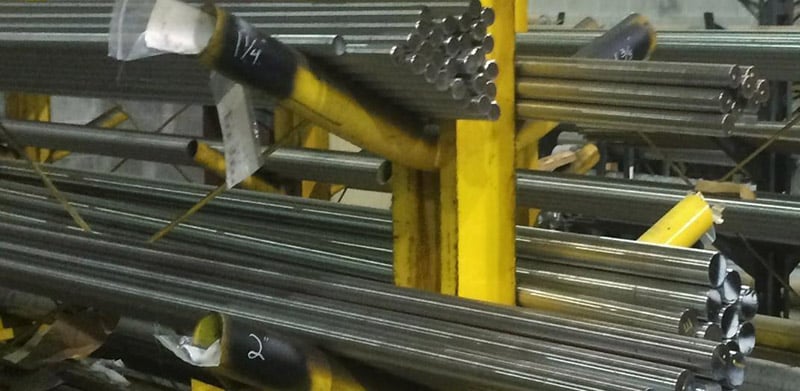
Stainless Steel Rounds (Inches)
| 3/4 | 1-7/16 | 2-1/2 | 4-1/2 |
| 7/8 | 1-1/2 | 2-3/4 | 4-15/16 |
| 15/16 | 1-3/4 | 2-15/16 | 5 |
| 1 | 1-15/16 | 3 | |
| 1-1/8 | 2 | 3-7/16 | |
| 1-3/16 | 4-7/16 | 3-1/2 | |
| 1-1/4 | 2-3/16 | 3-15/16 | |
| 1-5/16 | 2-1/4 | 4 | |
| 1-3/8 | 2-7/16 | 4-7/16 |
Ordering, Availability, and Quality Assurance With Specialty Steel
Specialty Steel offers high-quality 316L stainless steel, including TG&P shafting, rigorously tested to meet ISO standards. Our stainless steel is fully traceable, ensuring the highest level of craftsmanship. We offer custom cutting services and extensive stock, allowing you to order precisely what you need for your project.
Contact us today to request a quote and experience our commitment to quality and customer satisfaction.
"*" indicates required fields