In industrial steel procurement, line-item price per pound is one of the most deceptive metrics…
The Best Steel Grades for Highly Corrosive Marine Environments
Selecting raw steel stock for marine applications leaves no margin for error. Saltwater exposure, constant chloride immersion, and fluctuating splash zones quickly trigger galvanic corrosion, pitting, and stress corrosion cracking in standard structural alloys. For machine shops, maintenance teams, and industrial fabricators, choosing the proper marine-grade steel is the most effective way to eliminate premature equipment failure.
Specialty Steel stocks raw industrial alloys engineered to withstand severe operating environments, including dual-certified 316/316L stainless steel and Duplex 2101 stainless. Sourcing raw bar, plate, and precision shafting directly from a dedicated distributor ensures your components maintain their structural integrity against relentless chloride attack.
This technical guide breaks down the performance characteristics of marine alloys, outlines critical failure mechanisms in seawater, and highlights why 316/316L and lean duplex grades provide reliable long-term service.
What Makes a Steel Grade Marine Grade?
Marine grade steel refers to alloys containing specific alloying elements that resist pitting, crevice attack, and oxidation caused by sodium chloride. The primary defining element is molybdenum, which reinforces the metal’s passive chromium oxide barrier.
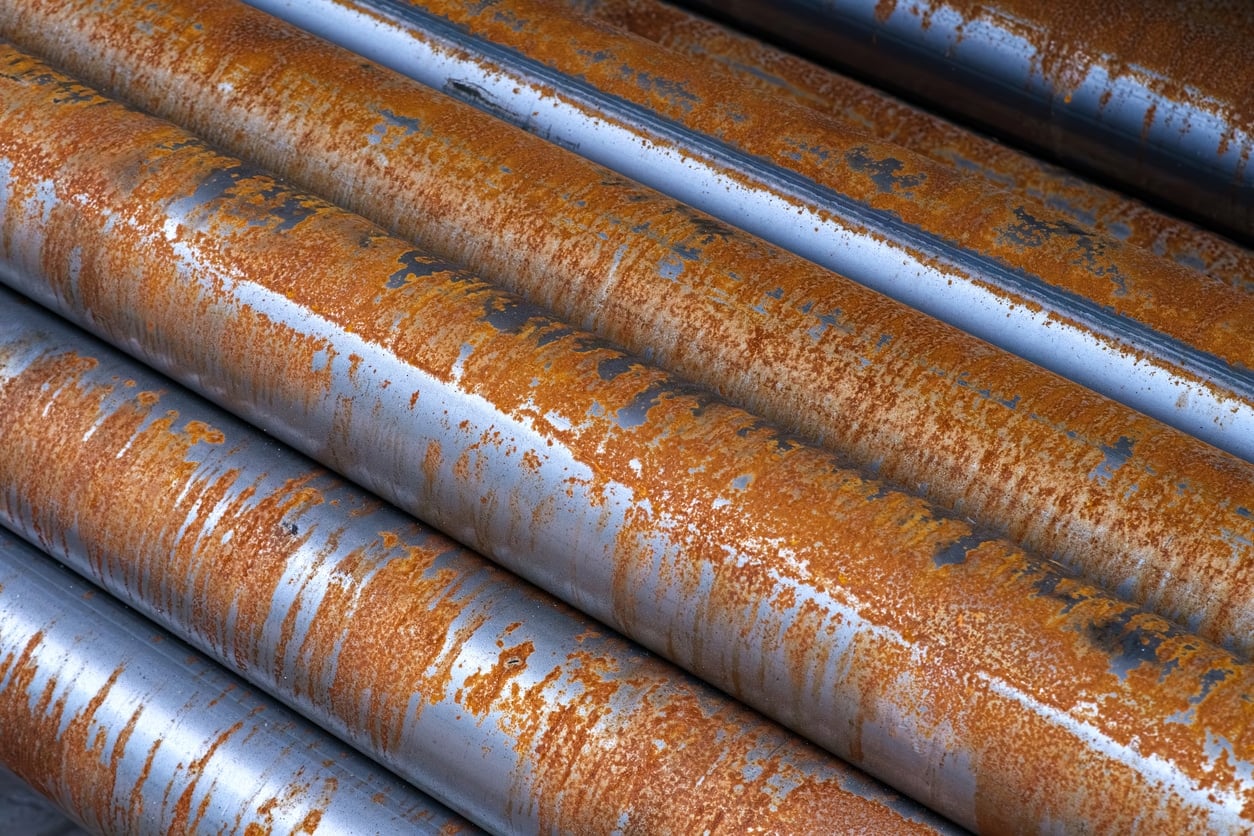
Without adequate alloying, standard carbon or chrome-plated bars suffer pinhole pitting in stagnant or aeration-deficient saltwater. When pits form, they concentrate localized stresses and accelerate structural failure.
True marine alloys maintain stability across continuous submersion, atmospheric splash zones, and high-load mechanical drive assemblies. Selecting between austenitic grades and lean duplex configurations depends on your required yield strength, welding demands, and surface finish tolerances.
Why 316/316L Is the Best Stainless Steel for Salt Water
For decades, 316 stainless steel has served as the benchmark marine material. While standard 304 stainless steel functions well in general washdown settings, it readily pits when exposed to chlorides and marine atmospheres. Grade 316 incorporates 2% to 3% molybdenum, significantly elevating its resistance to chloride attack.
Dual-certified 316/316L combines the tensile performance of standard 316 with the weld integrity of 316L. The “L” designation indicates a low carbon limit of 0.03% maximum. This tight composition prevents chromium carbide precipitation along grain boundaries during heavy fabrication or welding.
Mechanical and Machining Characteristics
Austenitic 316/316L remains non-magnetic in the annealed condition and delivers high ductility. It is well suited for turned, ground, and polished (TG&P) shafting running through marine seals, pump housings, and rudder collars.
- Tensile Strength: 80,000 to 94,000 PSI min.
- Yield Strength: 30,000 to 65,000 PSI min.
- Hardness: 185 to 217 BHN.
- Structure: Austenitic matrix providing high impact toughness even at freezing operating temperatures.
Stocking dual-certified 316/316L allows machine shops to cover multiple engineering prints with a single raw inventory grade. It eliminates separate purchasing overhead while assuring compliant material test reports for marine field installations.
Duplex 2101 Applications in High-Stress Marine Structures
Where mechanical load requirements surpass the yield capacity of austenitic 300-series steel, lean duplex grades bridge the gap. Duplex 2101 (UNS S32101) features a two-phase metallurgical microstructure containing roughly equal parts austenite and ferrite.
This balanced grain structure yields nearly double the yield strength of annealed 316L stainless steel while maintaining excellent resistance to chloride stress corrosion cracking (SCC). Standard austenitic steels can fail under high static loads in warm chloride environments, whereas duplex grades halt crack propagation across ferrite-austenite phase boundaries.
Key Industrial Applications for Duplex 2101 Stock
Duplex 2101 is available in both plate and TG&P round bar stock. Common marine fabrications include:
- High-Load Marine Drive Shafts: Operating at twice the yield strength of 316L allows design engineers to reduce shaft diameters without sacrificing load-carrying capacity.
- Desalination and Water Filtration: Used in structural components, intake manifolds, and high-pressure housings exposed to concentrated brine.
- Marine Structural Brackets & Plates: Replacing thicker carbon steel plates in offshore structures where weight reduction and atmospheric corrosion resistance are essential.
- Mooring and Fastener Assemblies: Providing high fatigue strength for hardware exposed to cyclic wave dynamics.
Because Duplex 2101 utilizes manganese and nitrogen rather than excessive nickel content, it offers stable raw material pricing for large-scale structural jobs.
Explore More About Duplex 2101
Marine Grade Steel Technical Comparison
Evaluating chemistry, mechanical properties, and corrosion metrics helps ensure your shop orders the right bar or plate stock.
| Steel Grade | Structure / Type | Yield Strength (PSI min) | Tensile Strength (PSI min) | Typical Hardness | Primary Marine Advantage |
| 316/316L Stainless | Austenitic | 65,000 | 94,000 | 185 BHN | Superior general corrosion and pitting resistance in saltwater; non-magnetic. |
| Duplex 2101 | Austenite + Ferrite (Lean Duplex) | 65,000 | 94,000 | 290 BHN max | Higher mechanical yield; resistant to stress corrosion cracking; magnetic. |
| 304/304L Stainless | Austenitic | 30,000 | 75,000 | 170 BHN | Cost-effective for freshwater; vulnerable to pitting and crevice corrosion in marine salt. |
| 4140 Heat Treated (TGP) | Quenched & Tempered Alloy | 100,000+ | 125,000+ | 28–34 Rc | Extreme torsional strength; requires protective coatings or encasement in marine environments. |
The comparison shows clear differentiation between grades. While 4140 alloy shafting provides high mechanical strength for internal marine winches or gearboxes, it lacks inherent corrosion resistance and will oxidize without external sealing. For direct contact with saltwater, raw stock must feature the chromium, molybdenum, and nitrogen alloying present in 316L or Duplex 2101.
3 Critical Factors When Machining Marine Grade Stock
Machining raw stainless steel bar requires specific operational steps to prevent premature field failures. Saltwater will exploit any micro-fissure, heat-affected zone, or surface contaminant left behind during shop fabrication.
1. Work Hardening and Tooling Strategy
Austenitic stainless steels like 316 work-harden rapidly if the cutting tool rubs rather than shears the metal. Machine operators should maintain positive rake angles, rigid work setups, and constant feed rates.
Allowing a tool to dwell glazes the workpiece surface. This work-hardened skin reduces machining efficiency and introduces residual surface stresses that compromise corrosion resistance.
2. Preventing Free-Iron Contamination
Carbon steel particles left on machine tool chucks, grinding wheels, or deburring pads will embed into raw stainless stock. Once exposed to humid marine air, these embedded carbon particles rust, breaking the passive oxide layer and causing localized galvanic attack.
Dedicated stainless tooling and proper chemical passivation baths restore the chromium oxide passive layer. This step ensures clean parts arrive on-site fully resistant to chloride exposure.
3. Sizing and Tolerances: TGP vs. Mill Finish
For shafts running through stern tubes, bushings, or hydraulic seals, ordering Turned, Ground, and Polished (TG&P) bar stock ensures required concentricity. TGP processing removes hot-rolled decarb layers and guarantees uniform diameters along the full length of the bar.
Specifying precision bar stock reduces machining passes in your shop. This saves spindle time and minimizes raw material scrap on tight-tolerance marine projects.
Ordering Cut-to-Length Marine Bar to Reduce Shop Waste
Procuring full 20-to-24-foot mill lengths often introduces unnecessary freight expenses and ties up valuable floor space. Marine maintenance runs and short production cycles frequently demand specific lengths for replacement shafting or structural pins.
Specialty Steel provides custom cut-to-length options across all standard imperial and metric bar inventory. Ordering precision-cut stock delivers clear procurement advantages:
- Lower Shipping Overhead: You pay freight only on the steel you actually use rather than transporting drop-off scrap.
- Immediate Spindle Readiness: Pre-cut pieces move directly onto CNC lathes and milling centers without preliminary bandsaw operations.
- Reduced Drop Waste: Minimizes inventory holding costs associated with slow-moving raw drops stored in your yard.
- Metric Sizing Support: Eliminates tedious turning down of imperial bar to hit metric pump and motor specs.
Whether your bill of materials calls for single replacement shafts or production-volume marine components, cut-to-length stock keeps shop operations efficient and cost-effective.
Source Certified Marine Grade Steel for Your Next Run
Preventing downtime in marine environments starts with verified material chemistry and traceable mill test reports. Sourcing raw stock through Specialty Steel provides machine shops and industrial fabricators with dependable access to prime alloy and stainless materials.
From precision TG&P shafting to cut-to-length wear plates, our inventory is stocked to meet tight tolerances without excess overhead.
Contact Specialty Steel today to request a quote or discuss stock availability with our technical sales team.
Frequently Asked Questions
What Is the Best Stainless Steel for Salt Water Submersion?
Dual-certified 316/316L stainless steel is the industry standard for saltwater submersion. Its 2% to 3% molybdenum content protects against chloride pitting and crevice corrosion, while its low carbon content prevents intergranular attack at weld seams.
Why Is 304 Stainless Steel Not Recommended for Marine Use?
Grade 304 contains 18% chromium and 8% nickel, but it lacks the molybdenum found in grade 316. In saltwater environments, chlorides break down 304’s passive surface layer, leading to severe pitting, localized corrosion, and premature component failure.
When Should Duplex 2101 Be Used Instead of 316L?
Duplex 2101 is preferred when high mechanical strength and resistance to stress corrosion cracking are required. With nearly twice the yield strength of 316L, Duplex 2101 allows engineers to design lighter, higher-capacity shafts and structural brackets exposed to heavy sea loads.
Does Induction-Hardened Chrome Shafting Resist Marine Corrosion?
Standard chrome-plated carbon steel bars feature a hard, smooth outer shell, but the underlying core remains susceptible to oxidation. In marine settings where saltwater can penetrate micro-cracks in the chrome layer, solid 316/316L or Duplex TG&P shafting should be used instead.
Can Specialty Steel Supply Metric Sizes for Marine Shafting?
Yes. Specialty Steel stocks both imperial and true metric sizes in dual-certified 316/316L and Duplex stainless steel. This availability eliminates the need to turn down imperial bar stock to fit metric bearings and pump seals.
Related Posts