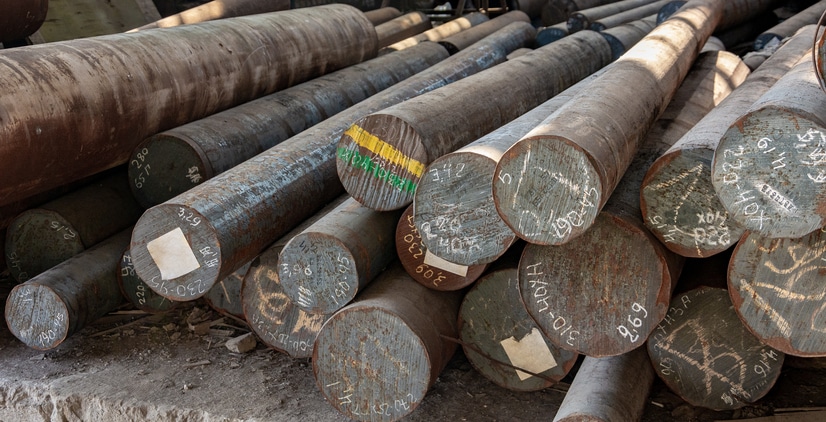
When it comes to performance and versatility, 4140 alloy steel stands out as a top-tier…

Best Welding Methods and Practices for 4140 Steel
When specifying steel for a demanding application, the alloy you choose affects not only performance but also how difficult the material will be to weld, machine, and fabricate. AISI/SAE 4140 is well known for its strength, toughness, and versatility in heavy machinery, automotive, oil and gas, forging, and aerospace applications.
Because 4140 steel contains medium carbon along with chromium and molybdenum, it responds differently to heat than common mild steels. Welding this alloy requires careful temperature control to avoid cracking and brittleness. Below is a complete guide to proper welding and fabrication practices for 4140 steel.
A Brief Introduction to 4140
This type of steel is a medium-carbon, chromium-molybdenum alloy steel with several key performance advantages.
High Hardenability
With carbon levels between 0.38 and 0.43 percent and added chromium and molybdenum, 4140 can harden deeply during heat treatment. This makes it ideal for components such as:
- Shafts
- Gears
- Spindles
- Downhole tools
- Heavy machinery parts
The drawback is that this same hardenability becomes a challenge during welding. If cooling occurs too rapidly, the heat-affected zone can form brittle martensite, increasing the risk of cracking.
Strength and Fatigue Resistance
Typical tensile strengths range from 95,000 to 108,000 psi and can be significantly higher after quenching and tempering. These properties make 4140 capable of withstanding repeated impact and heavy loading.
Heat Treatability
4140 can be quenched and tempered to achieve specific strength levels, making it a reliable choice for precision-engineered parts. However, the alloy’s high carbon equivalent (typically 0.55 to 0.65) indicates reduced weldability without strict temperature control.
How to Weld 4140 Steel: Best Practices
Since this steel is prone to hydrogen-induced cold cracking, welding must be performed carefully and consistently. The following best practices help ensure safe, durable welds.
Surface Preparation
Surface contamination introduces hydrogen into the weld pool. In 4140, hydrogen can diffuse into the heat-affected zone and cause delayed cracking.
To prepare correctly:
- Clean thoroughly by grinding, brushing, or using solvents
- Keep the joint area warm and dry
- Use bevels on sections thicker than 12 mm for full penetration
For 4140 steel, surface preparation is essential and not optional.
Choosing the Right Welding Materials
While 4140 base metal can exceed 100 ksi in strength, welders often intentionally undermatch the filler metal. This increases ductility in the weld zone and helps relieve stress instead of concentrating it.
Recommended Fillers
- SMAW: E7018 for general work, E10018-D2 for higher-strength applications
- GMAW/GTAW: ER80S-D2, the most common and versatile filler wire
To prevent hydrogen-related cracking, low-hydrogen consumables must be:
- Stored in heated ovens
- Kept dry
- Re-baked when required
Hydrogen control is the single most important factor in welding 4140.
Different Welding Methods
Steel of this type can be welded using several processes, each with its own benefits.
TIG Welding (GTAW)
- Ideal for thin materials or root passes
- Allows precise temperature control
- Produces clean, high-quality welds
- Best for work requiring accuracy or aesthetics
TIG is the most controlled but also the slowest welding method.
MIG Welding (GMAW)
- Suitable for medium to thick sections
- Faster deposition rates than TIG
- Performs well with ER80S-D2 wire
- Ideal for production environments
This method balances quality and efficiency.
Shielded Metal Arc Welding (SMAW)
- Best for field repairs or budget-sensitive projects
- E7018 offers good ductility and hydrogen control
- Welds may not be as visually clean as TIG or MIG
SMAW is mainly used where access or cost makes other methods impractical.
Critical Thermal Controls for 4140 Steel
Unlike stainless steel, which often struggles with overheating, 4140’s primary challenge is rapid cooling and hydrogen entrapment. Welding requires strict temperature management.
Preheating Requirements
Preheating slows the cooling rate, reduces hardness in the heat-affected zone, and allows hydrogen to escape.
Typical Preheat Ranges
| Thickness | Preheat (°C) | Preheat (°F) |
| 12 mm or less | 150 to 200 | 300 to 400 |
| 12 to 50 mm | 200 to 300 | 400 to 570 |
| Over 50 mm | 250 to 350 | 480 to 660 |
If the part has been quenched and tempered, the preheat temperature should remain at least 15°C below the original tempering temperature.
Interpass Temperature Control
Interpass temperatures typically need to remain between 300 and 315°C. Staying within this range reduces the risk of:
- Undercooling
- Grain coarsening
- Formation of hard martensite in the HAZ
In many cases, interpass temperature is more critical than amperage settings.
Heat Input and Bead Technique
Moderate, steady heat input prevents both brittle microstructures and excessive grain growth.
Use the following techniques:
- Stringer beads over wide weave beads
- Stable travel speeds
- Monitored amperage and voltage
Low heat input creates brittle martensite, while excessive heat input weakens the microstructure. The goal is balanced and consistent heat.
Post-Weld Heat Treatment (PWHT)
While some steels do not require PWHT, 4140 usually does when strength and reliability are essential.
Hydrogen Bake-Out
Immediately after welding:
- Hold at 200 to 350°C
- Maintain for 1 to 3 hours
This process allows hydrogen to escape before the steel cools into the cracking range.
Tempering and Stress Relief
For critical components:
- Heat to 550 to 650°C
- Hold for one hour per inch of thickness
- Cool slowly through furnace cooling or insulation
This softens the heat-affected zone to approximately 22 to 32 HRC, restoring ductility and toughness.
Welding 4140: Risks Involved
Hydrogen-Induced Cold Cracking
Cracks may appear 24 to 48 hours after welding.
Brittle Heat-Affected Zone
Occurs when cooling is too rapid or preheat is skipped.
Loss of Strength in Quenched and Tempered Material
Localized overheating can permanently reduce hardness and yield strength.
Because of these risks, welding 4140 should be done by trained welders who understand high-hardenability steels.
Machining and Fabricating 4140: Best Practices
Welding joins parts together. Machining steel transforms them into precise, functional components.
Tooling
- Choose carbide tooling
- Keep cutting edges sharp to avoid work hardening
Cooling
- Maintain continuous coolant flow
- Prevents overheating and micro-cracking
Speeds and Feeds
- Too slow can cause work hardening.
- Too fast generates excessive heat.
- Balanced cutting parameters give the best results.
Get High-Quality 4140 Steel From Specialty Steel in Cleveland City, OH
Welding 4140 successfully requires more than experience. It begins with the right material. Specialty Steel supplies fully traceable 4140 bar, plate, and rod, along with expert guidance to help you choose the proper grade for your project.
Whether you are fabricating heavy machinery components or repairing high-strength parts, our team can help ensure reliable performance.
For pricing, availability, or custom 4140 cut-to-size options, contact us today.
4140 Welding and Fabrication FAQs
Yes. Its high carbon equivalent and deep hardenability make it susceptible to cracking without proper heat control.
No. Even thin sections require 150 to 200°C of preheat to reduce cracking risk.
ER80S-D2 and E7018 are common choices. E10018-D2 may be used when higher strength is required.
Not all, but any thick or highly stressed weld should be tempered to restore toughness in the HAZ.
Yes. The procedure should follow 4140 requirements, but the filler typically matches the mild steel side.
Related Posts