
AR500 Steel from Specialty Steel
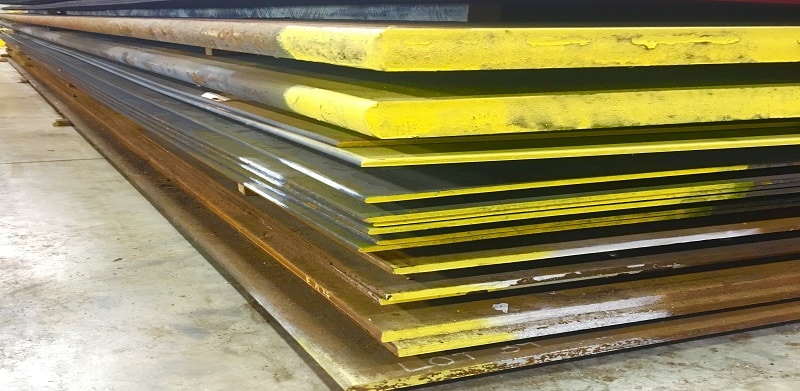
We stock AR500 steel, including AR500 wear plates, AR500 steel sheets, and AR500 plates, in sizes ranging from 1/4″ thick up to 2″ thick. Call or email us for a free quote. This AR500 steel is an abrasion-resistant, thru-hardened alloy wear plate with a hardness range of 470-540 BHN. Our inventory includes sizes from 48″ x 96″ up to 96″ x 288″. Inquire about all Hi-Def Plasma and Oxy-Cutting jobs. We are a leading AR500 steel distributor and can provide detailed information on AR500 steel composition for your specific needs.
AR500 Steel Plates FAQ’s
The key distinction between AR500 plates and AR400 steel plates lies in hardness, which directly impacts wear life. AR500 plate typically features a Brinell Hardness (BHN) range of 477-534, offering superior resistance to severe impact and sliding abrasion compared to AR400 steel plate (typically 360-440 BHN). If your application involves high-velocity materials or extreme wear conditions (like in mining or quarry liners), the longer service life of AR500 plate generally justifies the cost. For applications requiring more forming or welding, or those with less severe wear, AR400 steel plate may be sufficient. Both are categories of premium AR plate.
Yes. While AR plates are the most common form for surfacing and liner applications, high-quality alloy steel distributors often carry complementary materials. At Specialty Steel, we offer specialized alloy steel bar stock (such as 4140) and other high-strength, low-alloy (HSLA) materials that are quenched and tempered to deliver high hardness and toughness, suitable for pins, shafts, and structural components that also require wear resistance.
When sourcing specialized materials like AR plate, ensure your alloy steel distributors meet three criteria: Certification, Processing, and Inventory. They should provide certified Material Test Reports (MTRs) to guarantee the chemistry and hardness of the steel (e.g., 470-540 BHN for AR500). They should offer pre-processing services like Hi-Def Plasma or Oxy-Cutting, and they should maintain a deep, immediate inventory of various thicknesses of both AR500 and ar400 steel plate to meet tight deadlines.
‘AR’ stands for Abrasion Resistant. AR plate is a specific class of quenched and tempered steel designed to handle severe wear. It is considered an alloy steel because elements like Chromium, Manganese, and Boron are intentionally added during production. These specific alloying elements, combined with the heat-treatment process, are what give AR500 its through-hardened microstructure and its exceptional hardness (and consequently, its abrasion resistance) far beyond that of standard carbon steel.
Due to its high hardness and alloy steel content, fabricating AR plate (especially AR500) requires specific handling. Welding requires proper preheating to reduce the risk of hydrogen-induced cold cracking in the heat-affected zone. Reputable alloy steel distributors can provide detailed technical data, including Carbon Equivalency (C.E.) values, to guide your welding procedures. For cutting, thermal processes like high-definition plasma or laser cutting are highly recommended over shearing due to the material’s strength.
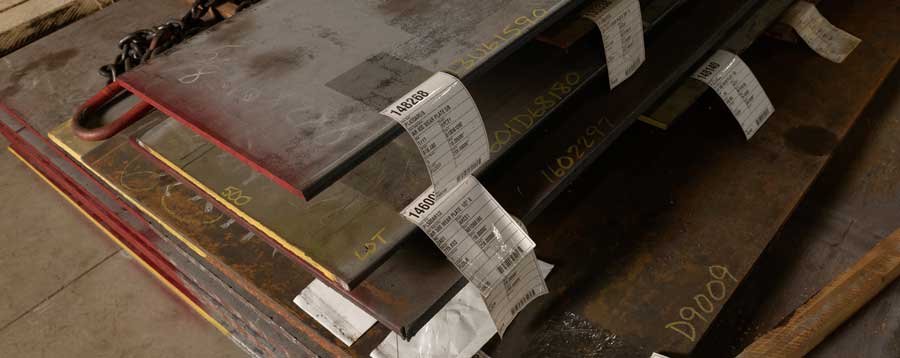
AR500 Chemistry
| C | Mn | Si | P | S | Cr | B |
| .30 max | 1.15 max | .60 max | .015 max | .005 max | .65 max | .0005-.005 |
Plate Sizes (Inches)
| 1/4 | 1/2 | 1 | 2 |
| 3/8 | 3/4 | 1-1/2 |
Width & Lengths (Inches)
| 48 x 96 | 48 x 144 |
| 96 x 144 | 96 x 288 |
"*" indicates required fields