
AR400 Steel from Specialty Steel
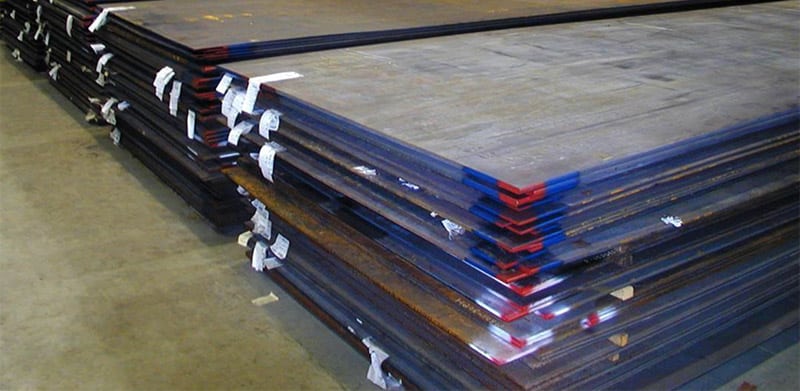
Tackle Extreme Wear with Precision-Cut AR400 Wear Plates
When your equipment faces constant friction and impact, standard carbon steel isn’t enough. Our through-hardened abrasion-resistant alloy provides the perfect balance of hardness, weldability, and formability to extend the life of your critical components.
Request a Custom Quote – 800.321.8500
We stock AR400 plate steel, including AR400 plates and AR400 steel strips, in sizes ranging from 1/8″ thick up to 4″ thick. Call or email us for a free quote. This AR400 steel is an abrasion-resistant, thru-hardened alloy wear plate with a hardness range of 360-440 BHN. Our inventory includes sizes from 48″ x 96″ up to 96″ x 288″. Inquire about all Hi-Def Plasma and Oxy-Cutting jobs. We can provide detailed information on AR400 steel properties for your specific needs.
Detailed Technical Specifications
- Brinell Hardness (BHN): 360–444 (Target: 400).
- Superior Strength: Yield strength of approx. 140–150 ksi and Tensile strength reaching 180–200 ksi.
- Through-Thickness Integrity: Guaranteed 90-95% hardness at the midline even on plates up to 3″ thick.
- Formability: Unlike AR500, this grade maintains excellent cold-bending properties (suggested 3t–4t bend radius).
- Weldability: Highly compatible with standard low-hydrogen procedures (E7018); pre-heating is typically only required for thicknesses over 0.75″.
Common Industrial Applications
Because AR400 provides a superior balance of impact toughness and sliding abrasion resistance, it is the “workhorse” alloy for heavy industry.
- Mining & Aggregate: * Primary Applications: Crusher side liners, vibrating screen plates, and grizzly bars.
- Benefit: Withstands the high-velocity impact of falling rock and ore without cracking or shattering like harder, more brittle grades.
- Heavy Construction & Earthmoving:
- Primary Applications: Excavator bucket “skins,” bulldozer moldboards, and trench box cutting edges.
- Benefit: Its weldability allows for easy field repairs and reinforcements to extend the life of expensive yellow-iron assets.
- Material Handling & Waste:
- Primary Applications: Garbage truck floor liners, industrial shredder housings, and conveyor transfer chutes.
- Benefit: Resistant to “gouging” from scrap metal and heavy debris, ensuring the structural integrity of the hopper remains intact.
- Agriculture & Forestry:
- Primary Applications: Plow blades, harvester components, and wood chipper wear plates.
- Benefit: Maintains a sharp edge longer than mild steel while remaining ductile enough to resist breakage when hitting stones or stumps.
Request a Custom Quote – 800.321.8500
Why Choose Specialty Steel?
In a market of “order takers,” Specialty Steel operates as an integrated supply chain partner. We don’t just ship raw metal; we deliver ready-to-install solutions.
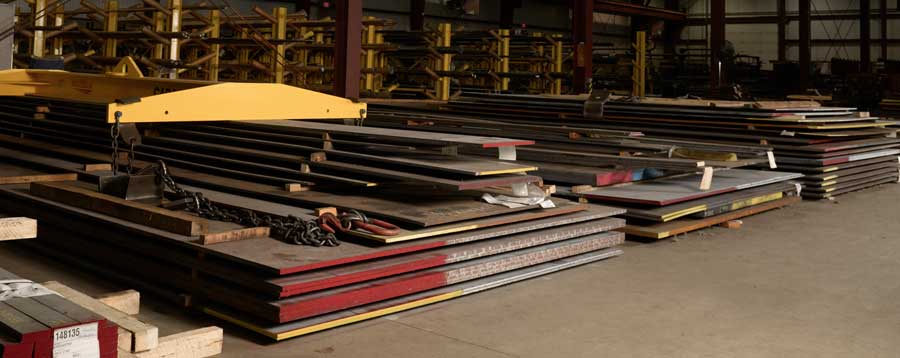
- Deepest Inventory in the Region: We stock “hard-to-find” thicknesses (3″ and 4″ plates) that most regional centers have to special order. This eliminates the 4-6 week mill lead time for your urgent repairs.
- Ready-to-Weld Fabrication: Our in-house Hi-Def Plasma and Oxy-Fuel capabilities allow us to cut complex CAD geometries, bolt holes, and countersinks. Your wear liners arrive finished, reducing your internal shop labor by up to 40%.
- MTR Transparency (Material Test Reports): Every shipment is accompanied by a certified MTR. You can verify the exact chemistry—specifically the Manganese and Boron content—that provides the impact toughness your application demands.
- Logistical Agility: Whether you need a single custom-cut wear strip or a full truckload of 8′ x 20′ plates, our national logistics network ensures competitive freight and reliable delivery windows.
Request a Custom Quote – 800.321.8500
Frequently Asked Questions
What Is The Difference Between This Grade and Its 500-Level Counterpart?
The primary distinction lies in the balance between hardness and flexibility. While a 400 Brinell plate is engineered for high impact and structural durability, the 500-level version is significantly harder. However, the higher hardness makes it more brittle. For applications requiring welding or cold-forming, the lower-hardness alloy is typically the safer and more versatile choice for structural wear parts.
Is This Wear-Resistant Material Easily Weldable?
Yes, this specific hardened alloy is known for its excellent weldability compared to higher-grade alternatives. We recommend using low-hydrogen electrodes (such as E7018) and following standard pre-heat procedures, especially when working with thicknesses exceeding 0.75 inches. This ensures the integrity of the heat-affected zone (HAZ) remains intact.
Can I Bend or Form These Abrasion-Resistant Plates?
This tough industrial metal can be cold-formed or bent using a large radius. Because it is less brittle than higher-Brinell metals, it responds well to high-tonnage press brakes. We suggest a minimum bend radius of 3t to 4t (three to four times the material thickness) to prevent surface cracking during the fabrication process.
How Does “Through-Hardening” Improve The Life of My Equipment?
Our quenched and tempered plate is hardened throughout its entire cross-section, not just on the surface. Unlike “case-hardened” substitutes that fail once the thin outer layer is stripped away, this through-hardened material provides consistent protection until the plate is physically worn thin, drastically extending the service life of your machinery.
Which Industries Benefit Most From Using 400-Nominal Hardness Plate?
It is considered the “gold standard” for any sector handling abrasive bulk materials. This durable wear-lining is most commonly utilized in mining, aggregate production, and heavy construction. Specifically, it is the go-to choice for lining dump truck beds, cement mixer drums, and industrial shredder housings where both friction and impact are constant threats.
| C | Mn | Si | P | S | Cr | Mo |
| .35 max | 2.00 max | .60 max | .035 max | .035 max | 1.00 max | 1.00 max |
Plate Sizes (Inches)
| 1/8 | 3/16 | 1/4 | 3/8 | 1/2 | 5/8 | 3/4 |
| 1 | 1-1/4 | 1-1/2 | 2 | 2-1/2 | 3 | 4 |
Widths & Lengths (Inches)
| 48 x 96 | 96 x 144 |
| 48 x 144 | 96 x 240 |
| 48 x 288 | 96 x 288 |
"*" indicates required fields